
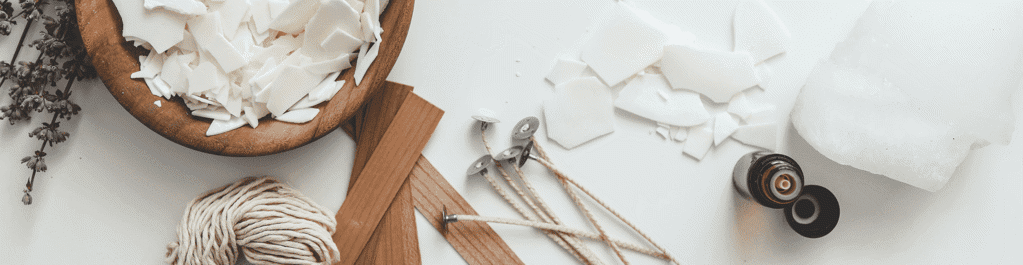
1. Provide materials & tools
• Wax (e.g., soy, rapeseed, coconut, or olive wax in pellet form)
• Candle containers (glass, tin, concrete containers, etc.)
• Wicks (e.g., Stabilo series in the appropriate size)
• Fragrance oils and candle dyes as desired
• Thermometer (to monitor melting and pouring temperature)
• Pitcher / melting pot (ideal: double-walled or water bath)
• Wick centerer and adhesive dots
________________________________________
2. Prepare containers
• Clean, dry, and preheat containers to around 50-60 °C to promote optimal wax adhesion and a smooth surface.
• Attach the wick to the center of the bottom with adhesive dots and fix it with a wick centerer.
________________________________________
3. Melt wax
• Slowly heat the wax in a water bath or melting pot.
• Recommended melting temperatures:
|
Type of Wax |
Recommended melting temperature according to product text |
Recommended pouring temperature according to product text |
Scent absorption according to product text |
|
Soy wax |
approx. 75 °C |
60–65 °C |
up to 10 % |
|
Rapeseed wax for container candles |
approx. 75 °C |
approx. 60 °C (for container wax) |
up to 10 % |
|
Coconut wax |
approx. 75 °C |
60–65 °C |
up to 12 % |
|
Olive wax |
approx. 75 °C |
60–65 °C |
up to 12 % |
• Do not heat above 85 °C to preserve fragrance and color properties.
________________________________________
4. Add scent and color
• Remove the pot from the heat once the melting temperature is reached.
• Stir in fragrance oils and oil-soluble dyes well.
• Maximum scent absorption:
• Soy/rapeseed/olive: up to 10 %
• Coconut: up to 12 %
________________________________________
5. Pour wax
• Cool the wax to the optimal pouring temperature (usually 60–65 °C, depending on the wax).
• Carefully pour into the preheated containers, slowly and evenly.
• For special blends, usually, only one pouring is necessary to achieve a smooth surface.
________________________________________
6. Let it harden
• Let candles rest for at least 48 hours at around 25 °C.
• Avoid drafts and strong temperature fluctuations.
________________________________________
7. Trim wick & test
• After hardening, trim the wick to about 5 mm.
• Conduct a test burn to check flame shape and burn duration.
________________________________________
🔎 Pro tips
• For very large containers, plan for double or triple wick candles if necessary.
• For layered candles, let each layer harden completely before pouring the next one.
• Always preheat glass carefully – this reduces cracks and adhesion problems.
• The more compatible the wax, fragrance oil, and wick are, the cleaner and less sooty the candle burns.